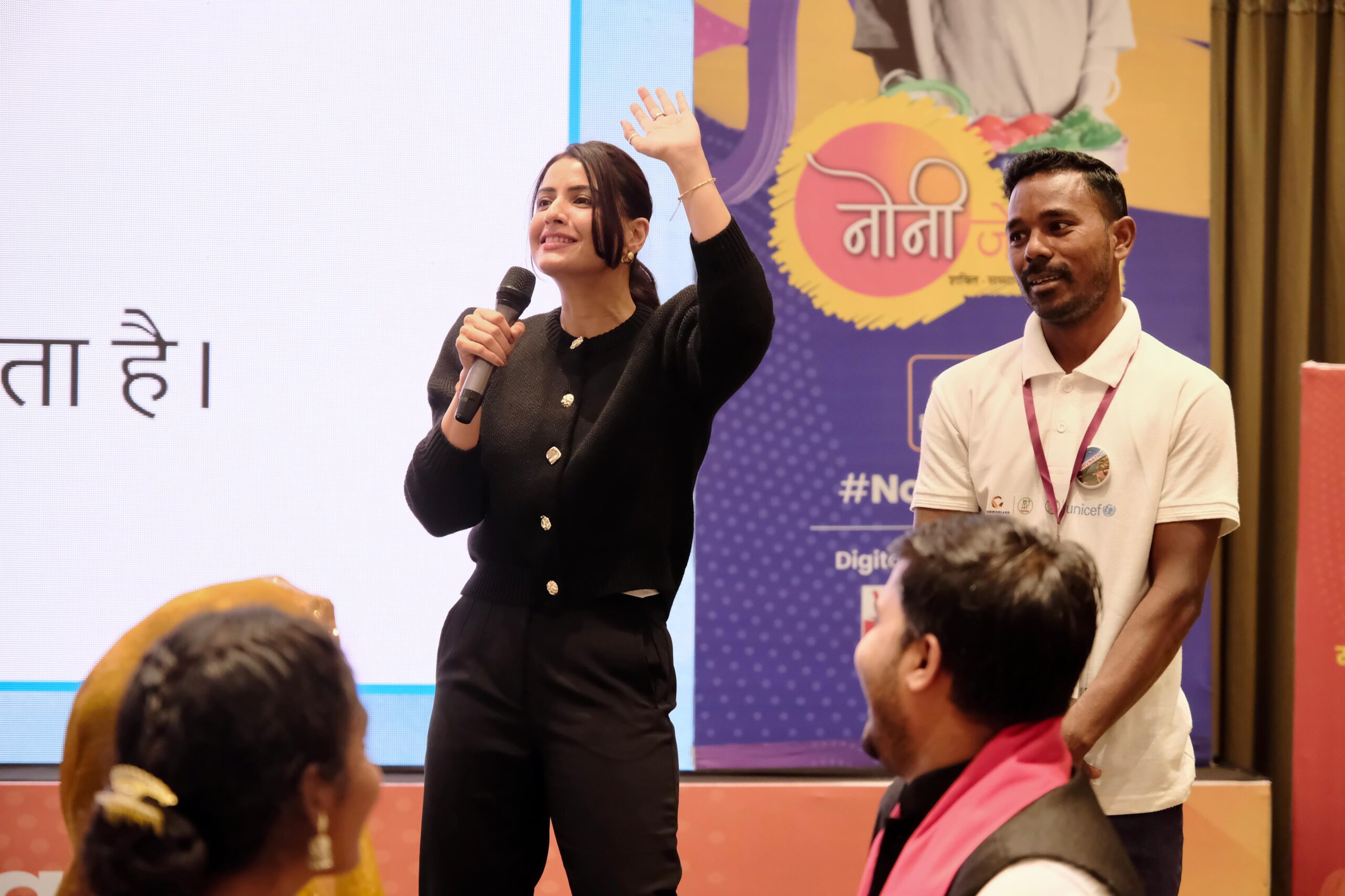
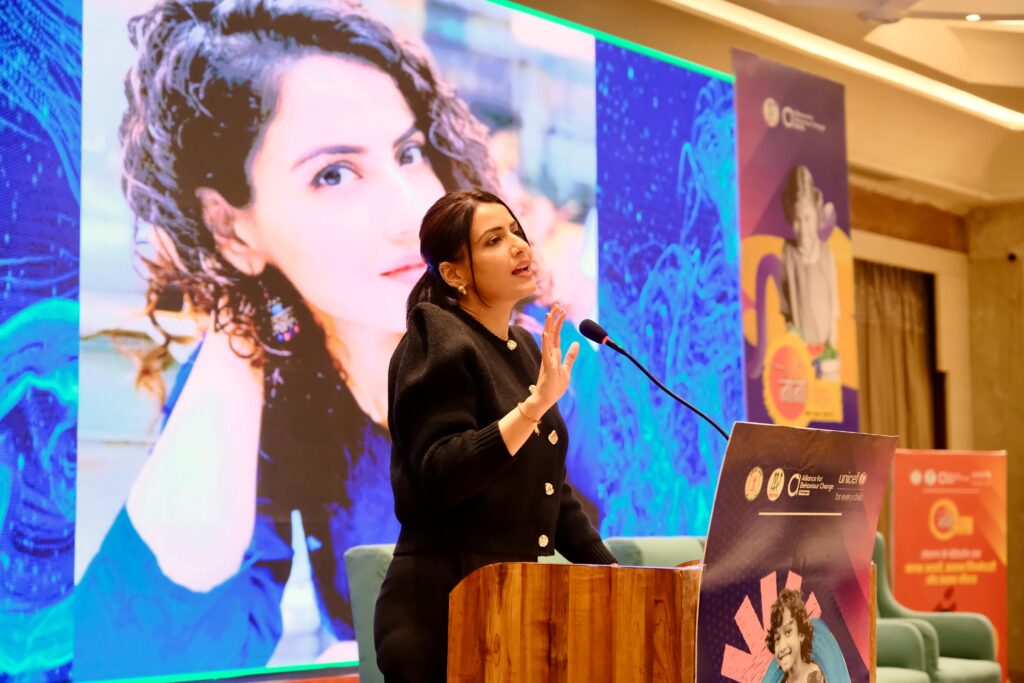
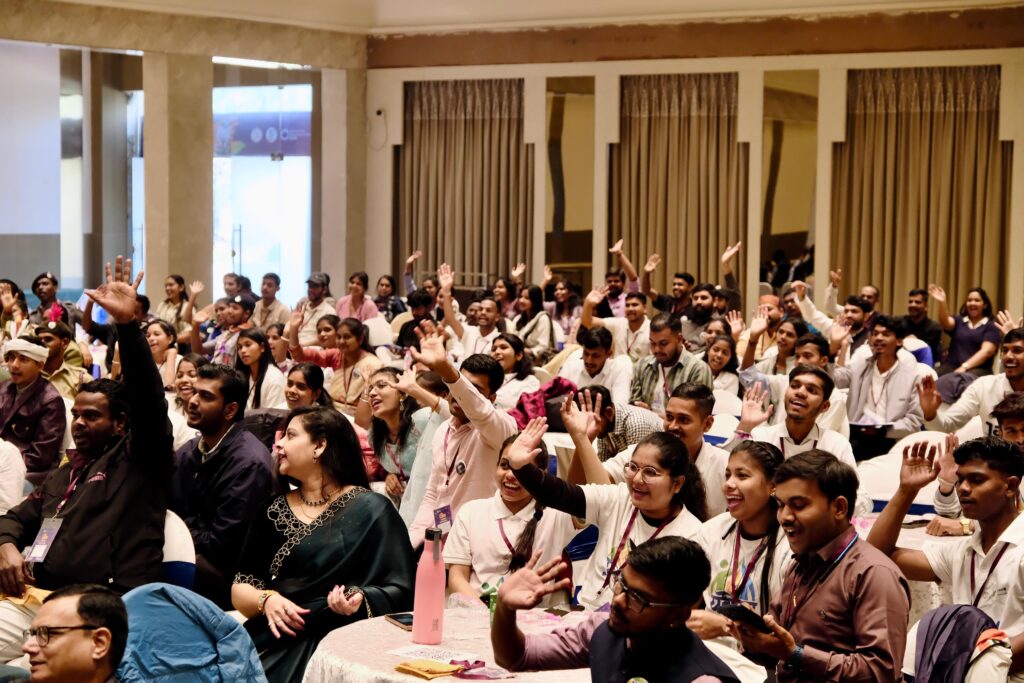
Raipur / Actor Smriti Kalra believes that some of the most meaningful conversations happen when people feel heard rather than instructed. That belief came alive during her recent visit to Noni Johar 4.0, a two-day youth programme held in Raipur, where she interacted closely with adolescents and young volunteers from across Chhattisgarh.Organised by UNICEF, Agricon Samiti and the Chhattisgarh Alliance for Behaviour Change, Noni Johar 4.0 brought together nearly 250 young participants from 15 districts to reflect on issues such as mental health, gender norms, self-worth and everyday behaviours that influence social change.For Smriti, known for her work across television and digital platforms, the experience went beyond a formal engagement.“There was a quiet sincerity in the way young people spoke here,” she says. “It didn’t feel performative. It felt honest.”
Beyond the Screen: Smriti Kalra
Over the years, Smriti Kalra has built a body of work that often mirrors the realities young people face — ambition, pressure, confidence and self-doubt. Alongside her acting career, she has increasingly used her public voice to speak about self-image, emotional wellbeing and the impact of social expectations, especially on young women.
These themes found a natural connect at Noni Johar, a platform designed to create safe spaces for volunteers to express themselves and challenge harmful social norms.
Conversations, Not Lectures
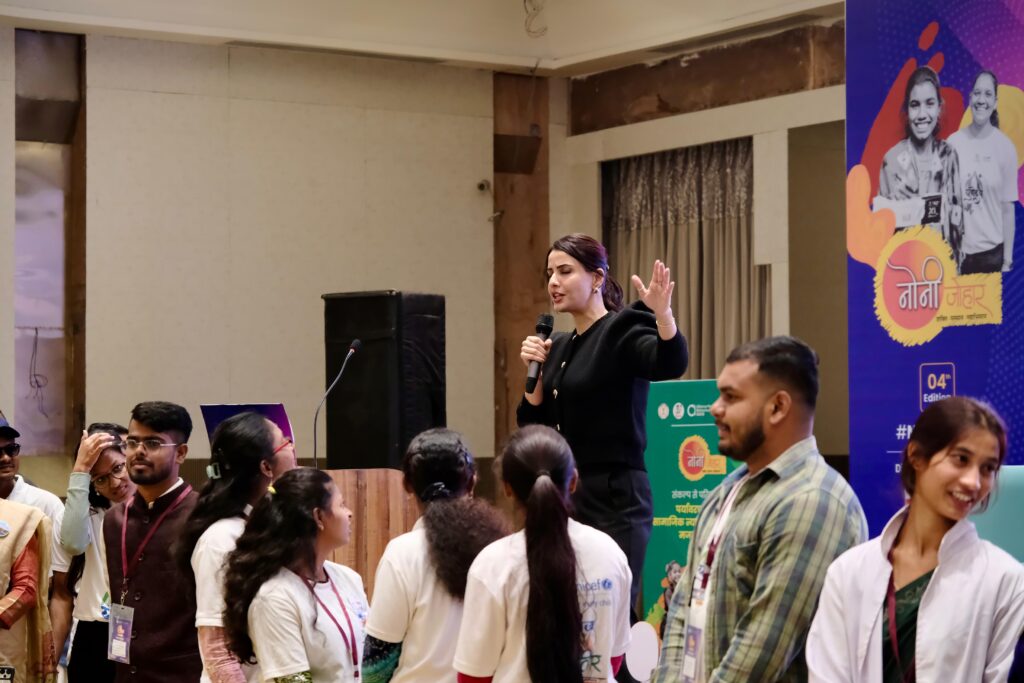
Instead of a conventional address, Smriti chose an interactive format titled “Fact or Friction”, where young participants responded to statements and questions through dialogue and reflection. The format encouraged openness and reduced the distance often felt in celebrity interactions.“A game changes everything,” Smriti explains. “It removes fear. Suddenly, people are not worried about saying the right thing — they’re just being real.”Discussions during the session touched upon social media influence, comparison, appearance-based judgement and the pressure to conform.
Questioning Beauty and Bias
One of the most powerful moments came when a participant raised a question on skin colour and beauty standards. Smriti responded by urging young people to examine ideas they often accept without questioning.
“Colour bias is something society teaches us,” she said. “It’s not a truth we are born with. If this generation starts questioning it, real change is possible.”
The exchange resonated strongly with the audience, sparking nods and quiet reflection across the room.
Experiencing Chhattisgarh
For Smriti, the visit also offered a deeper look into Chhattisgarh and its people.“The pace here felt calmer and more grounded,” she shares. “People listen with patience. Even casual conversations felt warm and genuine.”She was particularly struck by the clarity and confidence of young volunteers from rural and semi-urban districts.“There’s a misconception that awareness belongs only to big cities,” she says. “What I saw here challenged that completely.”
Behaviour Change Begins with Dialogue
Noni Johar 4.0 is rooted in the idea that lasting social change begins with small shifts in everyday behaviour. Smriti sees a role for public figures in supporting this process by helping normalise difficult conversations.“I don’t believe in giving sermons,” she reflects. “If young people feel it’s okay to talk about self-doubt, pressure or emotions, that itself is behaviour change.”
Moments That Stayed
After the formal session ended, Smriti spent time speaking informally with participants — listening to their stories, posing for photographs and sharing quiet conversations away from the stage.“Those one-on-one moments stayed with me the most,” she says. “When someone feels heard, even briefly, it makes a difference.”
Noni Johar 4.0 continues to emerge as a platform that places adolescents at the centre of dialogue, not as passive listeners but as active voices shaping conversations on identity, mental health and social norms. By combining behaviour insights with creativity and lived experiences, the initiative demonstrates how safe spaces and honest dialogue can nurture confident, socially aware young changemakers. Smriti Kalra’s engagement added a relatable and human dimension to these conversations — reinforcing the idea that meaningful change begins not with grand speeches, but with listening, empathy and mutual respect





Leave a Reply