
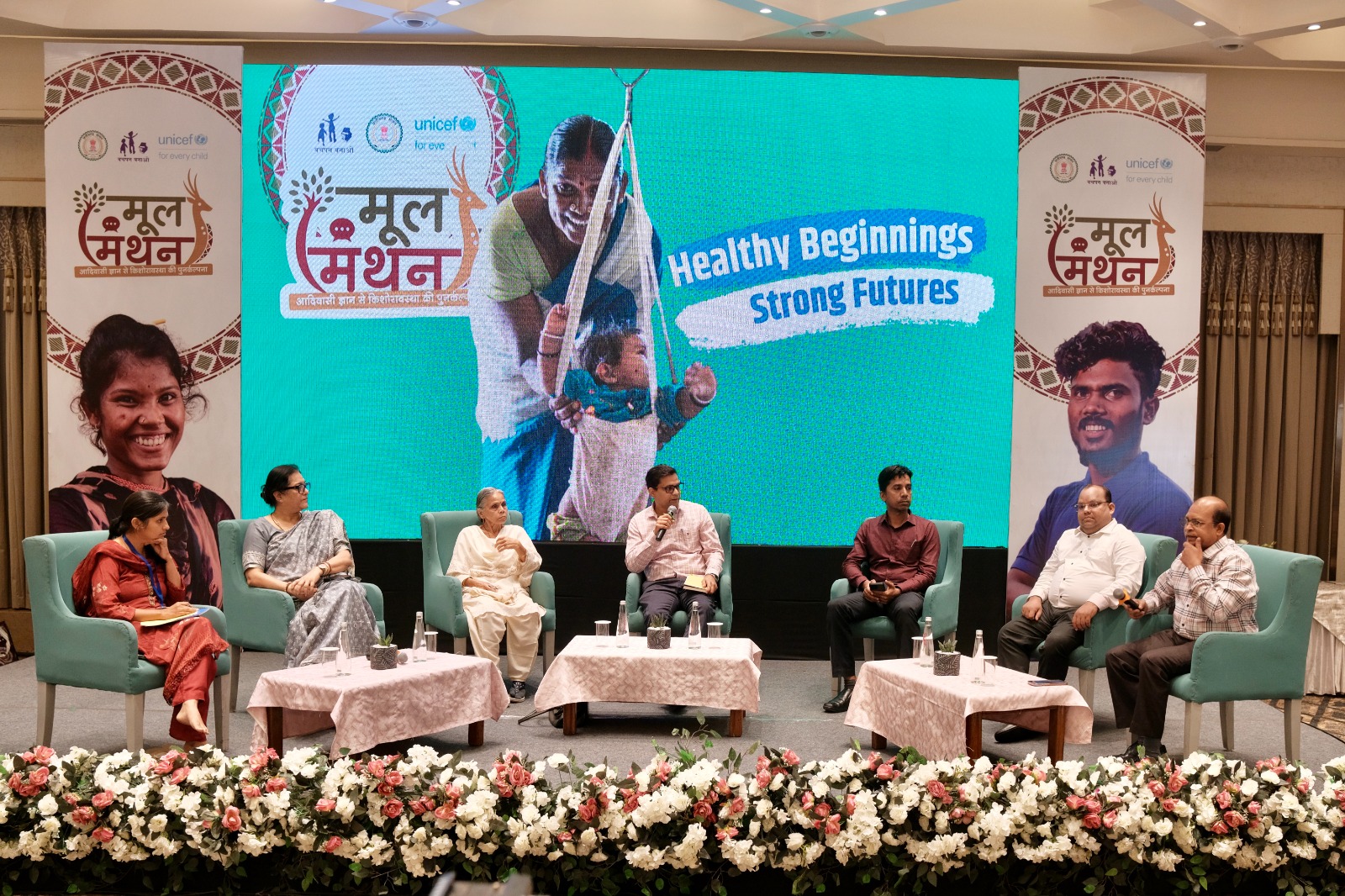
Two-day consultation brings together government, experts, communities and young people to strengthen outcomes for tribal children and adolescents
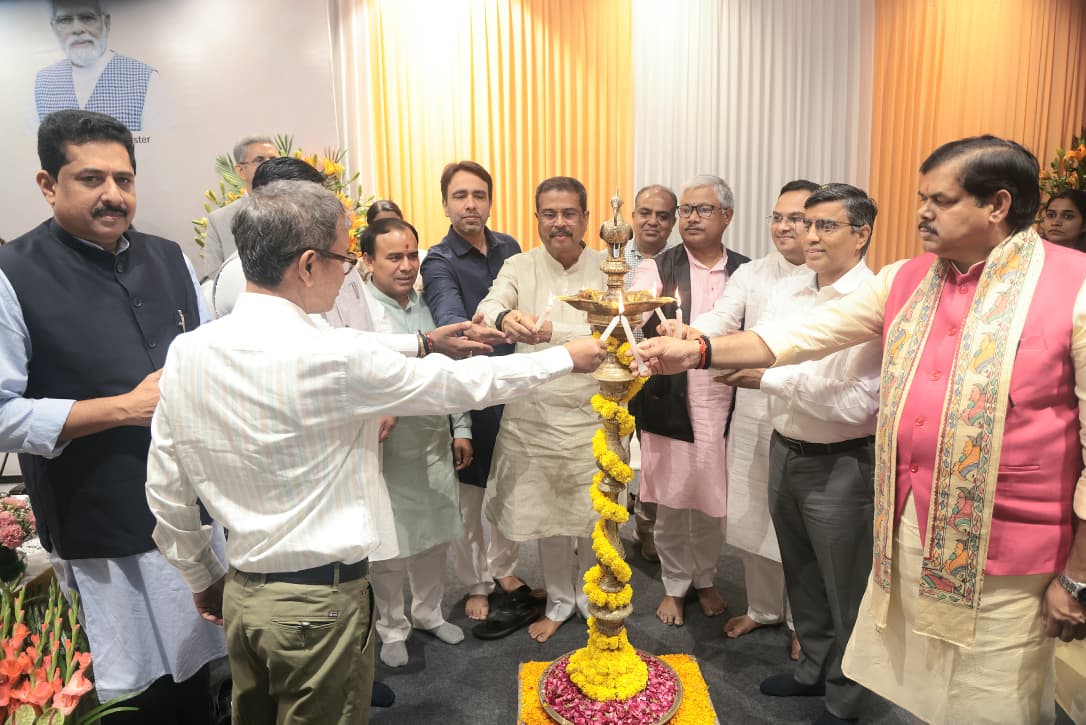
RAIPUR, CHHATTISGARH, 23 July 2026: The Government of Chhattisgarh, in collaboration with UNICEF, inaugurated the two-day regional consultation, ‘Mool Manthan: Reimagining Adolescence through Tribal Knowledge’, in Raipur today.
The consultation brings together policymakers, government officials, subject experts, academicians, researchers, development partners, civil society organisations, tribal community representatives and young people to explore how culture, community systems and behavioural insights can strengthen programmes for tribal children and adolescents, including those from Particularly Vulnerable Tribal Groups.
The first day featured discussions on adolescent health and nutrition, anaemia, water, sanitation and hygiene, education, child protection, mental health, safe adolescence, social norms and community participation.
The consultation aims to develop locally relevant and community-owned strategies for improving the health, education, protection and overall well-being of tribal adolescents.
Culture and community knowledge as foundations for development
Addressing the inaugural session, Dr Varnika Sharma, Chairperson, Chhattisgarh State Commission for Protection of Child Rights, described tribal culture as the backbone of Indian society. Referring to the concept of Gyan Gudi, she highlighted that children learn not only in schools but also through their communities, nature, traditions and lived experiences.
She emphasised that policies and services for tribal children should be grounded in empathy, dignity and respect and should recognise local languages, knowledge systems and aspirations.
Dr Sonmani Borah, Principal Secretary, Tribal Development Department, Government of Chhattisgarh, described Mool Manthan as an important step towards Viksit Chhattisgarh and Viksit Bharat 2047.
He encouraged participants to reflect on the relationship between culture and modernity and underlined that development need not result in the loss of cultural identity. He highlighted the importance of local languages and community institutions in making programmes more relevant and effective.
Convergence for improved outcomes
Seema Kumar, Chief of Field Office, UNICEF Chhattisgarh, emphasised that the purpose of Mool Manthan is to bring different departments, institutions, experts and communities together around a shared objective.
“Sustainable improvements in the lives of tribal children and adolescents require convergence. Health, nutrition, education, protection, water and sanitation cannot be addressed in isolation. When government departments, communities, knowledge institutions and development partners work together, programmes become more responsive and results become more sustainable,” said Seema Kumar.
She reaffirmed UNICEF’s commitment to supporting the Government of Chhattisgarh in strengthening coordinated and evidence-informed approaches for tribal children and adolescents.
Culture as a way of life
Providing a national perspective, Lopamudra Tripathy, Social and Behaviour Change Specialist, UNICEF India, highlighted the growing focus on culturally informed and community-led programming in UNICEF’s engagement with the Ministry of Tribal Affairs and other national partners.
“Culture is not merely a collection of traditions; it is a way of life. It shapes how people think, make decisions and relate to one another. Any effort to improve outcomes for tribal children and adolescents must therefore begin by understanding and respecting the cultural systems that guide community life,” said Lopamudra Tripathy.
She noted that Chhattisgarh’s experience could contribute to wider national learning on how cultural knowledge, community institutions and behavioural insights can strengthen tribal development programmes.
Relationships built on trust and respect
Padma Shri Dr Ramchandra Godbole highlighted the importance of approaching tribal communities with humility, affection and respect.
He observed that development practitioners should see themselves not merely as teachers, but as guides who are also willing to learn from the resilience, knowledge and lived experiences of tribal communities.
His message, “Where there is love, there is everything; where there is no love, there is nothing,” reinforced the importance of building trust and meaningful relationships with tribal children and communities.
Technical sessions and community voices
Technical sessions during the day examined adolescent anaemia, malnutrition, mental health, WASH practices, social norms, service access and community participation.
Experts discussed how programmes can better understand the barriers and motivations influencing behaviours and how local languages, festivals, traditional institutions, community leaders and culturally significant spaces can become effective platforms for engagement.
A panel featuring tribal youth and community representatives brought forward lived experiences related to education, health, social expectations, cultural identity and adolescent aspirations.
Participants emphasised that sustainable change cannot be achieved through schemes and infrastructure alone. It also requires:
- community participation and ownership;
- trusted local leadership;
- culturally relevant communication;
- responsive and respectful service delivery;
- behavioural insights; and
- convergence across government departments and partners.
Developing a State roadmap
On the second day, participants will work in thematic groups to translate the discussions into practical recommendations and a proposed State roadmap for strengthening community engagement and behavioural outcomes among tribal adolescents.
The roadmap is expected to identify priority behaviours, community platforms, opportunities for departmental convergence and approaches for integrating tribal knowledge and culture into future programme planning.
Mool Manthan seeks to ensure that tribal communities are not viewed only as recipients of development programmes, but as partners, knowledge holders and leaders in shaping solutions for their children and adolescents.

Leave a Reply